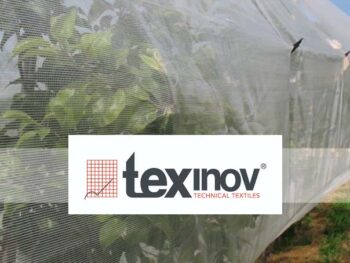
Chemists seek to reduce the use of pesticides in agriculture through the use of innovative anti-insect nets. Since 2013, Jason Tavares, Professor of Chemical Engineering, has been developing nets in partnership with Université Laval and IRDA. These nets, made of biodegradable polymers (PLA) from fermented corn or sugar cane, serve as a physical and biochemical barrier against insect pests. The meshes are designed to be smaller than the targeted insects, physically excluding pests such as the apple aphid. To enhance the effectiveness of the nets, the team has introduced the Dip Dip Dry method, an innovative technique that makes the net hydrophobic, preventing fungal attacks. This method, adapted from a solvent crystallisation technique, modifies the surface of the material to create microstructures capable of repelling water and retaining biomolecules, such as pheromones.
The pheromones used act as an additional protective layer, repelling insects by simulating warning signals of the presence of predators. The periodic application of these pheromones by the farmer helps maintain the effectiveness of the net. These combined innovations are promising for reducing the use of pesticides in agriculture; thereby providing a sustainable and environmentally friendly approach.
Website: https://www.texinov.com/
Funders




Our certifications